Systematic Review
Biosafety Assessment of Synthetic Microbial Communities: Methods and Standards 

 Author Correspondence author
GMO Biosafety Research, 2024, Vol. 15, No. 6
Received: 04 Oct., 2024 Accepted: 06 Nov., 2024 Published: 16 Nov., 2024
As an innovative biotechnology tool, synthetic microbial communities have shown great potential in agricul-ture, medicine and industry. This study summarizes the existing biosafety assessment methods and technical means for synthetic microbial communities, analyzes the current status and shortcomings of the standardized assessment framework, and explores the future direction of promoting biosafety management through inter-national cooperation and technological innovation. The study found that environmental diffusion, gene trans-fer, host toxicity and mutation risk are key factors affecting the controllability and stability of synthetic mi-crobial communities; environmental monitoring, host toxicity experiments, gene transfer analysis and long-term evolution testing are core assessment methods, but the synergy between different technologies is not sufficient. At the same time, the current biosafety assessment framework lacks specificity and urgently needs to integrate key indicators such as stability, toxicity and controllability to establish a unified interna-tional assessment standard. This study provides comprehensive technical and theoretical support for the bi-osafety management of synthetic microbial communities, emphasizing the importance of international coop-eration, technological innovation and legal framework. By standardizing the assessment process and devel-oping new management tools, the safe application of synthetic microbial technology can be promoted while reducing its potential ecological and social risks.
1 Introduction
Synthetic microbial communities refer to a type of microbial system composed of artificially designed and combined microorganisms that can work together to complete specific tasks. Such communities have broad application prospects in many fields, such as agriculture, healthcare, and industry (Zhou, 2024). For example, they can promote plant growth, inhibit harmful bacteria, or help decompose pollutants in the environment.
Scientists often use high-throughput technologies to quickly build and test these microbial communities. One tool, called kChip, can build and test about 100,000 synthetic microbial communities per day, greatly accelerating the process of researchers screening the best microbial combinations to meet different application needs (Kehe et al., 2019).
With the development of new biotechnologies, it has become easier to design and optimize these microbial communities. These technologies have the potential to bring sustainable and efficient solutions to many fields. However, the interactions between microorganisms and between microorganisms and the environment are often complex, which makes it difficult to accurately predict the performance of these communities in actual applications. Therefore, actual testing and screening work is particularly important (Kehe et al., 2019).
Although synthetic microbial communities have great potential, there are also certain biosafety risks in actual applications. These risks include the possibility of unexpected effects on the environment, gene transfer with other organisms, or the possibility that some microorganisms may acquire harmful characteristics. These biosafety risks must be properly addressed before synthetic microbial communities are widely used. In the absence of strict safety testing, they may pose a potential threat to the natural environment and human health. To prevent these problems from occurring, a sound risk assessment and management system needs to be established.
This study will systematically review the existing methods and standards for biosafety assessment of synthetic microbial communities, including a comprehensive review of the construction and screening technologies of synthetic microbial communities, an evaluation of existing biosafety assessment methods, identification of deficiencies in current standards, and suggestions for improving biosafety specifications to ensure the safe application of synthetic microbial communities.
2 Biosafety Issues of Synthetic Microbial Communities
2.1 Environmental dissemination and persistence
When synthetic microbial communities are released into the environment, there is a risk that they will spread to unintended areas. These microorganisms may enter the soil, water, or air and spread to adjacent ecosystems. This spread may cause problems such as destroying local microbial communities or disturbing local ecological balance (De Roy et al., 2014; Kehe et al., 2019; Karkaria et al., 2020).
Another issue that needs attention is the survival time of these synthetic microbial communities in the environment. Many synthetic microorganisms are designed to be relatively stable and have good synergistic effects, which allows them to survive when the environment changes (Mee et al., 2014; Stenuit and Agathos, 2015). However, this stability also means that once released, these microorganisms may be difficult to remove or control. If they persist in the environment for a long time, they may pose a persistent ecological risk. This problem is more difficult to manage due to their ability to adapt to different environmental conditions (Stenuit and Agathos, 2015; Kehe et al., 2019).
2.2 Horizontal gene transfer
Another major biosafety risk is horizontal gene transfer (HGT). This refers to the phenomenon of genes in synthetic microorganisms being transferred to natural microorganisms. If some engineered genes (such as antibiotic resistance genes or genes for specific metabolic functions) are transferred to wild microorganisms, new problems may arise. For example, this may make harmful bacteria more likely to survive or more difficult to treat (De Roy et al., 2014; Mee et al., 2014; Karimi et al., 2017).
The risk of gene transfer is higher because individuals in synthetic microbial communities usually work together and interact frequently. These community designs emphasize synergistic effects, such as sharing nutrients or promoting each other's growth. Such close interactions may also accelerate gene transfer between them (Mee et al., 2014; Goldford et al., 2017).
If synthetic genes get into natural microbes, this could change how these microbes behave and how ecosystems function. It may disturb existing microbial networks and lead to unexpected changes in the environment (Stenuit and Agathos, 2015; Karimi et al., 2017).
2.3 Unknown host-microbe interactions
The use of synthetic microbial communities (SynComs) in different environments (including humans, animals, and plants) may pose certain biosafety risks. These microorganisms may produce certain secretions that may affect the health of the host. Some of these effects may be beneficial, but others may have adverse effects on the host. Therefore, these potential toxic effects must be carefully evaluated and continuously monitored (Timm et al., 2023).
At present, the long-term effects of synthetic microorganisms on the host are still unknown. In plant research, engineered microbial communities are often designed to improve plant health, but there is still uncertainty about the effects of these microorganisms on plant growth and ecosystem balance in long-term applications (Ke et al., 2020). In animal experiments, SynComs are often used to promote nutrient absorption or improve health, but their long-term effects on animal health and possible side effects remain a focus of research (Jennings and Clavel, 2023).
These unknown factors highlight the importance of ongoing biosafety assessments. Interactions between hosts and microorganisms must be continuously monitored to reduce potential risks and ensure biosafety.
2.4 Mutation and evolution risks
During use, synthetic microorganisms may undergo genetic mutations. These mutations may lead to unexpected new traits in microorganisms, which may pose potential hazards to the environment or the host. Therefore, the genetic stability of synthetic microorganisms is a key biosafety issue. If mutations occur, they may change the function of the microorganism, especially in medical or agricultural applications, and such changes may pose serious safety risks (Kang et al., 2020). In addition, the possibility of horizontal gene transfer (HGT) further increases this risk. Mutations combined with gene transfer between microorganisms may lead to unpredictable consequences.
Microbial communities may also evolve during application due to environmental changes or interactions between species. These evolutionary changes may affect the stability and behavioral characteristics of the community. Studies on the design and testing of microbial communities based on automated platforms have shown that these changes may affect the safety and performance of synthetic microbial communities (Kehe et al., 2019).
Synthetic microbial communities used in gnotobiotic models and infection studies provide important clues for our in-depth understanding of microbial evolution processes. These studies confirm that mutation and evolution are important risk factors that require high attention (Stecher, 2021).
Therefore, it is necessary to establish strict biosafety testing and control strategies. Through scientific planning and evaluation, the probability of harmful mutations can be effectively reduced and the safe application of synthetic microbial communities can be guaranteed.
3 Existing Biosafety Assessment Methods for Synthetic Microbial Communities
3.1 Environmental safety assessment
To assess the safety of synthetic microbial communities in the environment, researchers use a variety of testing methods to observe the spread of these microorganisms in the environment and their interactions with the environment. One commonly used method is simulation based on genome-wide metabolic models (GEMs). By simulating the metabolic processes of microorganisms, these models can predict the behavior of microorganisms under different conditions (Wang et al., 2023).
High-throughput tools such as kChip are also used to quickly construct and test large numbers of synthetic microbial communities, helping researchers understand how these microorganisms perform in different environments (Figure 1) (Kehe et al., 2019).
 Figure 1 kChip enables massively parallel construction of microbial communities (Adopted from Kehe et al., 2019) Image Caption: To run a kChip screen, 1-nL droplets are first produced. Each droplet contains a color code (a specific ratio of three fluorescent dyes) that maps to a corresponding input; After they have been pooled, droplets are loaded onto the kChip, where they randomly group into microwells; The microwells are designed to group precisely k droplets; The kChip is imaged to identify the contents of each microwell from the droplet color codes; Droplets are then merged within their respective microwells via exposure to an alternating-current electric field, generating parallel synthetic communities; Community phenotypes can be tracked via optical assays, including fluorescent protein expression and respiration-driven reduction of resazurin to the fluorescent product resorufin; (B) Example micrographs show grouping and merging of droplets for different microwell types; Microwells are densely packed on the kChip, with microwell density varying inversely with size (k) (Adopted from Kehe et al., 2019) |
After releasing synthetic microorganisms into the environment, in addition to short-term observations, long-term ecological monitoring is also required. Metagenomic sequencing (metagenomics) and environmental DNA (eDNA) analysis are commonly used monitoring methods. By collecting DNA from soil, water or air samples, these methods can detect whether synthetic microorganisms remain in the intended area or have spread to other areas (Ke et al., 2020; Marín et al., 2021). This can detect potential negative effects at an early stage.
3.2 Host toxicity assessment
In order to test whether synthetic microorganisms are harmful to the host, scientists usually use animal models and plant models for experiments. In animal experiments, mice are often used as test subjects to evaluate the toxicity of microorganisms by observing their weight changes, organ function and immune response after exposure to microorganisms (More et al., 2022). In plant experiments, researchers will evaluate the effects of synthetic microorganisms on plant growth, health and disease resistance (Vorholt et al., 2017; Liu et al., 2019).
In addition, detailed testing of host immune system activity and other health indicators is equally important. Inflammation levels and immune responses can be assessed through techniques such as flow cytometry, enzyme-linked immunosorbent assay (ELISA) and transcriptome analysis. Combining these detection methods with basic toxicity tests will help establish a complete safety assessment system for synthetic microbial communities (Vorholt et al., 2017; More et al., 2022).
3.3 Horizontal gene transfer assessment
Horizontal gene transfer (HGT) refers to the exchange of genes between microorganisms. This gene transfer may pose a safety hazard, especially when harmful genes such as antibiotic resistance genes (ARGs) spread between microorganisms. Laboratories often conduct co-culture experiments, where synthetic microorganisms are cultured together with natural microorganisms to observe whether gene transfer occurs. Studies have found that under certain specific conditions, such as microgravity, HGT can occur rapidly even without antibiotic selection pressure (Nguyen et al., 2019; Urbaniak et al., 2021).
In addition, bioinformatics tools are also widely used to predict and study gene transfer processes. High-throughput DNA sequencing and analysis platforms can track the distribution of key genes such as resistance genes. These tools help to fully understand the risk of gene transfer and provide guidance for designing safer microorganisms (Gupta et al., 2020). In addition, there are related models that can be used to predict the long-term effects of new genes on microbial fitness and their interactions (Levi et al., 2022).
3.4 Evolutionary stability testing
Evaluating whether synthetic microbial communities can maintain genetic stability in long-term applications is an important part of ensuring their biosafety. Through continuous long-term culture experiments, researchers can track genetic and behavioral changes in these microorganisms. Technologies such as chromosome conformation capture and methylome analysis can be used to monitor changes in mobile genetic elements and genome structure (Saak et al., 2020).
For example, single-cell sequencing technologies such as Microbe-seq can help track mutations and gene transfer in microorganisms in detail (Zheng et al., 2022). Predictions based on whole-genome metabolic models (GEMs) can also help evaluate the stability of microbial metabolic pathways under different environmental conditions (Wang et al., 2023). These tools and methods are important guarantees to ensure that synthetic microbial communities remain safe, stable, and function normally during application.
4 Establishing Standardized Biosafety Assessment Methods
4.1 Current status of biosafety standards
Currently, most biosafety regulations for synthetic microbial communities are still based on general guidelines for traditional microbial management, such as those developed by the National Institutes of Health (NIH) and the European Union (EU). However, these regulations often fail to adequately cover the special risks that synthetic microorganisms may pose. For example, current regulations lack sufficiently specific guidance in the event that synthetic microorganisms escape into the environment or their genes are transferred to other organisms. Existing guidelines focus more on basic biocontainment measures and often ignore the detailed requirements required for engineered microorganisms with novel genetic circuits or designed dependencies (Wright et al., 2013; Ke et al., 2020).
4.2 Key indicators for biosafety assessment
Effective biosafety assessments require attention to multiple key aspects, including stability, biocontainment, and toxicity testing. Stability: refers to the ability of a microorganism to maintain its genetic configuration and function for a long time under different conditions. Biocontainment: ensures that synthetic microorganisms do not spread uncontrollably in the environment. This can be achieved through technical means such as toxin-antitoxin systems, conditional plasmids, or dependence on specific nutrients that do not exist in nature (Wright et al., 2013; Kehe et al., 2019; Ke et al., 2020). Toxicity testing: Assessing whether synthetic microorganisms may pose a hazard to humans, animals, or plants.
There are many different methods currently used for risk assessment. In vitro testing often uses high-throughput screening platforms such as kChip, which can quickly test thousands of microbial combinations to screen for safe communities (Kehe et al., 2019). In vivo testing may use gnotobiotic models to observe the interaction of synthetic microorganisms with living hosts under controlled conditions (Vorholt et al., 2017). In addition, computational tools based on genome-wide metabolic models (GEMs) can also predict the behavior of these microorganisms in real environments (Wang et al., 2023).
4.3 Standards for controllability design
In order to ensure biosafety, the growth and function of synthetic microorganisms must be well controlled. Common control tools include suicide switches and restricted gene expression. Suicide switches can trigger microorganisms to self-destruct under specific conditions, thereby preventing their uncontrolled spread. Other design methods can ensure that certain genes are only expressed under specific circumstances, thereby reducing the probability of unexpected events (Lee et al., 2018; Wang and Simmel, 2022).
Gene editing technology also provides more options for the controllability of microorganisms. For example, small transcription-activating RNA (STAR) and antisense RNA (asRNA) can turn gene expression on or off on demand. Systems such as riboswitches and riboregulators can achieve precise control of gene expression through strand displacement mechanisms (Lee et al., 2018; Wang and Simmel, 2022).
4.4 International collaboration and data sharing
The establishment of a shared biosafety data platform on a global scale is essential for the standardized management of synthetic microbial communities. Through international data sharing, researchers around the world can exchange biosafety information and learn from each other's research results, thereby improving the effectiveness and reliability of biosafety assessments (Terekhov et al., 2018; Lesnik et al., 2019).
Jointly developing unified tools and detection methods is also key to improving biosafety levels. International cooperation helps to build a robust and practical biosafety detection system. At the same time, emerging technologies such as machine learning can also assist in predicting the stability and safety of synthetic microorganisms under different environmental conditions. For example, machine learning models based on genomic data can be used to predict the response performance of microbial communities in changing environments (Lesnik et al., 2019).
5 Technical Tools for Biosafety Assessment
5.1 Molecular biology techniques
Molecular biology tools, such as qPCR (quantitative polymerase chain reaction) and high-throughput sequencing, are often used to study microbial communities. qPCR can measure the number of specific genes in microorganisms and is a simple and reliable method for detecting specific microbial genes (Jian et al., 2020; Han et al., 2023).
High-throughput sequencing, such as 16S rRNA gene sequencing, gives a big picture of the microbial community and its functions. However, this method may not always show which microbes are alive and active (Tourlousse et al., 2016; Wang et al., 2020).
The addition of synthetic DNA standards to these tests can improve the accuracy of the results. These standards help improve data quality and ensure that the number of genes measured is more accurate (Hardwick et al., 2018; Li et al., 2021).
5.2 Biosensors and genetic switches
Synthetic biology has created new safety tools like biosensors and genetic switches. These tools help control where and how synthetic microbes can live and grow.
Biosensors can sense environmental changes and trigger corresponding reactions inside microorganisms. Genetic switches can turn certain genes on or off based on external environmental signals (Kehe et al., 2019). These systems can prevent the spread of synthetic microorganisms in areas where they should not exist, and play an important role in ensuring their safe use.
5.3 Mathematical modeling and system simulation
Mathematical models and computer simulations are very useful in predicting the behavior of synthetic microorganisms after release into the environment. These models can simulate the interactions between different microorganisms and their environment (Kehe et al., 2019).
This helps scientists guess possible risks before the microbes are actually used. Understanding these interactions makes it easier to avoid harmful effects.
5.4 Integration of multi-omics technologies
Combining multi-omics technologies such as transcriptomics, metabolomics, and proteomics can provide a more comprehensive understanding of the dynamics within microbial communities. These tools can reveal which genes are expressed, which proteins are synthesized, and which metabolites are produced and utilized (Jo et al., 2020).
By integrating multiple omics data, it is possible to gain a deeper understanding of how synthetic microorganisms respond to environmental changes. This can help improve the level of biosafety assessment and support the safe use of synthetic microbial communities in various application areas.
6 Success Cases of Biosafety Management for Synthetic Microbial Communities
6.1 Agricultural applications
Synthetic microbial fertilizers have been used in farming to help crops grow better and to support more sustainable agriculture. However, it is very important to check how these microbes affect the environment to make sure they are safe to use.
Several methods are available to track how these microbes behave after they are added to the soil. Small-scale tests, like microcosms or mesocosms, are often done before large-scale use. These tests help fine-tune the monitoring methods. Some of these methods include growing the microbes in the lab (cultivation-based methods), using immunology-based tests, and applying DNA-based tools to follow both living and non-living microbial cells. These methods also help track specific genes that may be released into the environment.
In addition, high-throughput sequencing technology and phenotypic analysis also help scientists better understand the interactions between plants and microorganisms. These tools can reveal which microorganisms work better with which crop types. This knowledge is important for selecting the right combination of microorganisms with specific crops (Chai et al., 2021).
Research by Ke et al. (2020) also showed that improving plant-microorganism interactions through microbial design can increase crop yields and reduce dependence on fertilizers and pesticides (Figure 2). With the help of omics technology and synthetic biology methods, microorganisms with ideal traits can be designed to better promote plant growth. These modified microorganisms are called "chassis microbes" and can be adjusted according to agricultural needs to make them more efficient in agricultural production.
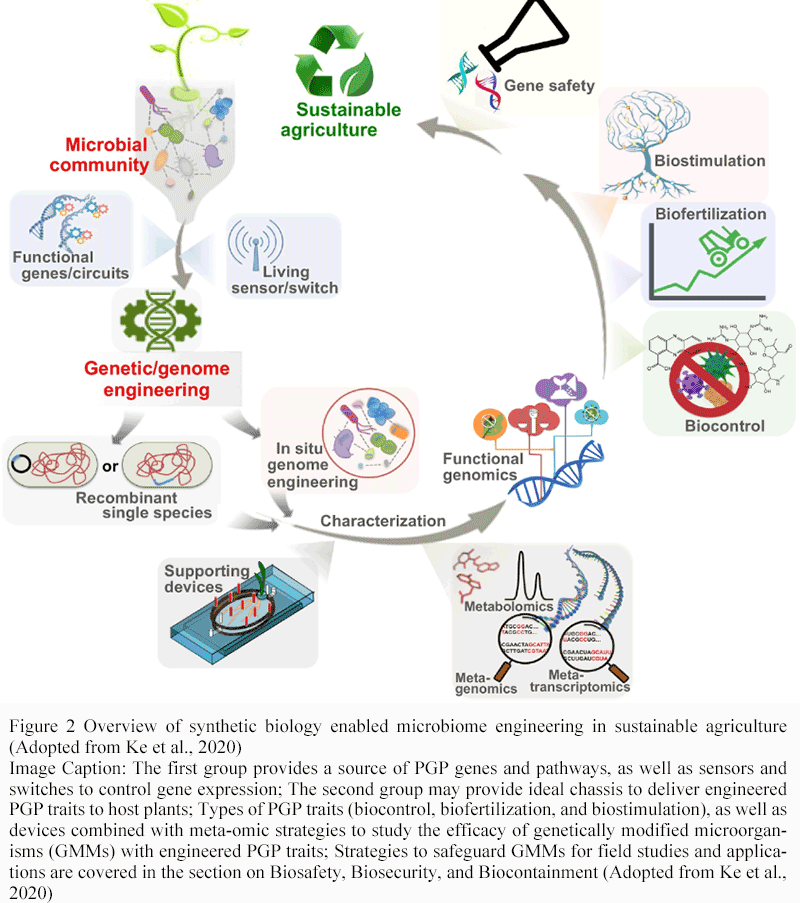 Figure 2 Overview of synthetic biology enabled microbiome engineering in sustainable agriculture (Adopted from Ke et al., 2020) Image Caption: The first group provides a source of PGP genes and pathways, as well as sensors and switches to control gene expression; The second group may provide ideal chassis to deliver engineered PGP traits to host plants; Types of PGP traits (biocontrol, biofertilization, and biostimulation), as well as devices combined with meta-omic strategies to study the efficacy of genetically modified microorganisms (GMMs) with engineered PGP traits; Strategies to safeguard GMMs for field studies and applications are covered in the section on Biosafety, Biosecurity, and Biocontainment (Adopted from Ke et al., 2020) |
6.2 Medical applications
In the medical field, synthetic microbial communities (SynComs) are being tried to modulate the intestinal microbiome to treat a variety of diseases. However, before being used for actual treatment, their safety must be fully evaluated.
Risk assessment helps ensure that these microorganisms do not pose a hazard to human health. Some synthetic biology safety standards in the food and feed fields can also provide references for medical applications. These standards include testing for nutritional risks, toxicity, allergic reactions, and the possibility of gene transfer between microorganisms.
At the same time, scientists are also developing new research tools to explore the effects of synthetic microorganisms on the intestine and intestinal health. These tools help researchers better understand the interactions between these microorganisms and the human body and ensure their safety in medical applications (More et al., 2022).
6.3 Industrial applications
In the industrial field, synthetic microbial communities are also used in wastewater treatment and other aspects. To ensure safety, it is necessary to monitor the survival time of these microorganisms in the environment and their possible ecological impacts.
New synthetic biology tools now make it easier to build and control these microbial groups for industrial use. These microbes can be designed to break down tough waste materials or stop harmful microbes from growing.
Research by McCarty and Ledesma-Amaro (2019) shows that these microbial communities can be quickly constructed using CRISPR/Cas9 and gene circuit design. This design method can help scientists study how microorganisms collaborate, share resources, or develop resistance. These designs can not only improve the production efficiency of biofuels, drugs, and other useful products, but also help develop safer environmental remediation and harmful microbial control methods (Figure 3).
 Figure 3 Tools to Construct Synthetic Microbial Consortia. Advancements in DNA and circuit-level assembly, CRISPR/Cas9, and other tools, enables rapid and efficient engineering of microorganisms (Adopted from McCarty and Ledesma-Amaro, 2019) Image Caption: (A) Quorum sensing (QS) systems can be used to coordinate signaling between organisms; (B) Gene expression in strains within a synthetic consortium can be independently regulated via exogenous addition of inducer molecules. Isopropyl β-D-1-thiogalactopyranoside (IPTG) induces expression of the Plac promoter, while anhydrotetracycline (aTc) induces expression of the Ptet promoter. C) Organisms in a microbial consortium can be engineered to engage in syntrophic exchanges, in which the resources produced by one organism are used by the other and vice versa (Adopted from McCarty and Ledesma-Amaro, 2019) |
High-throughput testing platforms such as kChip can quickly screen a large number of different microbial combinations. This helps find the microbial community that is most suitable for industrial tasks (Kehe et al., 2019).
By using these tools and monitoring systems, the risks of using synthetic microorganisms in wastewater treatment and other industrial environments can be effectively managed.
7 Future Directions in Biosafety Research for Synthetic Microbial Communities
7.1 Introduction of emerging technologies
New tools such as artificial intelligence (AI) and machine learning (ML) can help improve biosafety research. These technologies can process large amounts of data, predict potential risks, and assist in the design of safer synthetic microbial communities. For example, machine learning has been used to simulate interactions between microorganisms and predict what might happen when different microbial combinations coexist (Pacheco and Segrè, 2020; Wang et al., 2023).
In addition, tools such as dynamic flow balance analysis (dFBA) and genetic algorithms can also be used to adjust environmental conditions to find safer and more stable microbial community design solutions (Pacheco and Segrè, 2020).
High-throughput testing platforms such as kChip can help scientists quickly build and test thousands of microbial combinations (Kehe et al., 2019; Wu, 2024). These platforms can collect a large amount of real data on microbial interactions, and combined with automated safety detection tools, can improve testing efficiency and reliability (Johns et al., 2016; Kehe et al., 2019).
7.2 Risk minimization strategies
In order to reduce the risks that may arise during the application of synthetic microbial communities, researchers are exploring a variety of strategies. One approach is to use host-construct dependent systems, such as toxin-antitoxin pairs, or plasmids that are only effective under specific conditions. These tools can ensure that synthetic microorganisms cannot survive in uncontrolled environments.
Other methods include orthogonal systems, like using xeno nucleic acids. These systems create a “genetic firewall” between synthetic and natural microbes (Wright et al., 2013). This helps prevent gene transfer and unwanted spread.
Synthetic biology is also being used to design microorganisms that can degrade pollutants. Designs based on genome-scale metabolic models (GEMs) enable these microorganisms to safely and efficiently break down hazardous chemicals (Wang et al., 2023). This design not only reduces environmental risks, but also supports applications such as bioremediation (Ke et al., 2020; Wang et al., 2023).
7.3 Development of personalized assessment frameworks
As application scenarios diversify, different fields and environments have different requirements for biosafety. Therefore, in the future, biosafety solutions need to be tailored for specific application scenarios (such as agriculture, medical care, and pollution control). Built-in biosafety control tools (such as toxin-antitoxin systems or conditional plasmids) can help prevent synthetic microorganisms from growing in non-target environments (Wright et al., 2013).
For example, in farming, it is important to check how synthetic microbes interact with plants and the soil. Testing platforms like kChip make it easier to find safe and effective microbial combinations for these uses (Kehe et al., 2019).
Personalized biosafety frameworks should also look at things like environmental conditions and how microbes work together. This helps make sure that the microbes stay stable and safe after they are released.
7.4 Focus on legal and ethical issues
As synthetic biology technology develops rapidly, relevant laws, regulations and ethical guidance are urgently needed. These rules should prevent problems such as the uncontrolled spread of synthetic microorganisms, especially when they are used outdoors, where strong safety plans are essential (Ke et al., 2020).
The legal system needs to keep pace with scientific and technological progress and develop flexible and clear usage regulations to meet the needs of different application areas such as agriculture, medicine and environmental remediation (Wang et al., 2023).
In addition, public education is also an important part of ensuring the smooth implementation of biosafety measures. Educating the public about the benefits and risks of synthetic microorganisms can help build public trust. Transparent information sharing, including research progress and safety management plans, can better enable the public to participate in and understand relevant decisions. Public discussions and popular science lectures can also help promote discussion and consensus on the ethical level of synthetic biology technology (Efimochkina, 2022). When the public is fully informed and actively involved, biosafety measures will be more acceptable and more likely to succeed.
Acknowledgments
I would like to express my gratitude to my colleagues and research partners for their support and assistance in literature review and data analysis.
Conflict of Interest Disclosure
The author affirms that this research was conducted without any commercial or financial relationships that could be construed as a potential conflict of interest.
Chai Y., Ge Y., Stoerger V., and Schachtman D., 2021, High-resolution phenotyping of sorghum genotypic and phenotypic responses to low nitrogen and synthetic microbial communities, Plant, Cell & Environment, 44(5): 1611-1626.
https://doi.org/10.1111/pce.14004
De Roy K., Marzorati M., Van Den Abbeele P., Van De Wiele T., and Boon N., 2014, Synthetic microbial ecosystems: an exciting tool to understand and apply microbial communities, Environmental Microbiology, 16(6): 1472-1481.
https://doi.org/10.1111/1462-2920.12343
Efimochkina N., 2022, Bacterial pathogens in food: modern safety criteria and methods of molecular genetic analysis, Bulletin of Experimental Biology and Medicine, 173: 169-181.
https://doi.org/10.1007/s10517-022-05514-2
Goldford J., Lu N., Bajić D., Estrela S., Tikhonov M., Sanchez-Gorostiaga A., Segrè D., Mehta P., and Sánchez Á., 2017, Emergent simplicity in microbial community assembly, Science, 361: 469-474.
https://doi.org/10.1126/science.aat1168
Gupta C., Tiwari R., and Cytryn E., 2020, Platforms for elucidating antibiotic resistance in single genomes and complex metagenomes, Environment International, 138: 105667.
https://doi.org/10.1016/j.envint.2020.105667
Han X., Beck K., Bürgmann H., Frey B., Stierli B., and Frossard A., 2023, Synthetic oligonucleotides as quantitative PCR standards for quantifying microbial genes, Frontiers in Microbiology, 14: 1279041.
https://doi.org/10.3389/fmicb.2023.1279041
Hardwick S., Chen W., Wong T., Kanakamedala B., Deveson I., Ongley S., Santini N., Marcellin E., Smith M., Nielsen L., Lovelock C., Neilan B., and Mercer T., 2018, Synthetic microbe communities provide internal reference standards for metagenome sequencing and analysis, Nature Communications, 9(1): 3096.
https://doi.org/10.1038/s41467-018-05555-0
Jennings S., and Clavel T., 2023, Synthetic communities of gut microbes for basic research and translational approaches in animal health and nutrition, Annual Review of Animal Biosciences, 12(1): 283-300.
https://doi.org/10.1146/annurev-animal-021022-025552
Jian C., Luukkonen P., Yki-Järvinen H., Salonen A., and Korpela K., 2020, Quantitative PCR provides a simple and accessible method for quantitative microbiota profiling, PLoS ONE, 15(1): e0227285.
https://doi.org/10.1371/journal.pone.0227285
Johns N., Blazejewski T., Gomes A., and Wang H., 2016, Principles for designing synthetic microbial communities, Current Opinion in Microbiology, 31: 146-153.
https://doi.org/10.1016/j.mib.2016.03.010
Jo J., Oh J., and Park C., 2020, Microbial community analysis using high-throughput sequencing technology: a beginner’s guide for microbiologists, Journal of Microbiology, 58: 176-192.
https://doi.org/10.1007/s12275-020-9525-5
Kang M., Choe D., Kim K., Cho B., and Cho S., 2020, Synthetic biology approaches in the development of engineered therapeutic microbes, International Journal of Molecular Sciences, 21(22): 8744.
https://doi.org/10.3390/ijms21228744
Karimi B., Maron P., Bouré N., Bernard N., Gilbert D., and Ranjard L., 2017, Microbial diversity and ecological networks as indicators of environmental quality, Environmental Chemistry Letters, 15: 265-281.
https://doi.org/10.1007/s10311-017-0614-6
Karkaria B., Fedorec A., and Barnes C., 2020, Automated design of synthetic microbial communities, Nature Communications, 12(1): 672.
https://doi.org/10.1038/s41467-020-20756-2
Kehe J., Kulesa A., Ortiz A., Ackerman C., Thakku S., Sellers D., Kuehn S., Gore J., Friedman J., and Blainey P., 2019, Massively parallel screening of synthetic microbial communities, Proceedings of the National Academy of Sciences of the USA, 116: 12804-12809.
https://doi.org/10.1073/pnas.1900102116
Ke J., Wang B., and Yoshikuni Y., 2020, Microbiome engineering: synthetic biology of plant-associated microbiomes in sustainable agriculture, Trends in Biotechnology, 39(3): 244-261.
https://doi.org/10.1016/j.tibtech.2020.07.008
Lee Y., Kim S., and Moon T., 2018, Multilevel regulation of bacterial gene expression with the combined STAR and antisense RNA system, ACS Synthetic Biology, 7(3): 853-865.
https://doi.org/10.1021/acssynbio.7b00322
Lesnik K., Cai W., and Liu H., 2019, Microbial community predicts functional stability of microbial fuel cells, Environmental Science & Technology, 54(1): 427-436.
https://doi.org/10.1021/acs.est.9b03667
Levi L., Rippin I., Tulila M., Galron R., and Tuller T., 2022, Modulating gene expression within a microbiome based on computational models, Biology, 11(9): 1301.
https://doi.org/10.3390/biology11091301
Li B., Li X., and Yan T., 2021, A quantitative metagenomic sequencing approach for high-throughput gene quantification and demonstration with antibiotic resistance genes, Applied and Environmental Microbiology, 87(16): e00871-21.
https://doi.org/10.1128/AEM.00871-21
Liu Y., Qin Y., and Bai Y., 2019, Reductionist synthetic community approaches in root microbiome research, Current Opinion in Microbiology, 49: 97-102.
https://doi.org/10.1016/j.mib.2019.10.010
Marín O., González B., and Poupin M., 2021, From microbial dynamics to functionality in the rhizosphere: a systematic review of the opportunities with synthetic microbial communities, Frontiers in Plant Science, 12: 650609.
https://doi.org/10.3389/fpls.2021.650609
McCarty N., and Ledesma-Amaro R., 2019, Synthetic biology tools to engineer microbial communities for biotechnology, Trends in Biotechnology, 37: 181-197.
https://doi.org/10.1016/j.tibtech.2018.11.002
Mee M., Collins J., Church G., and Wang H., 2014, Syntrophic exchange in synthetic microbial communities, Proceedings of the National Academy of Sciences of the USA, 111: E2149-E2156.
https://doi.org/10.1073/pnas.1405641111
More S., Bampidis V., Benford D., Bragard C., Halldorsson T., Hernández-Jerez A., Bennekou S., Koutsoumanis K., Lambré C., Machera K., Mullins E., Nielsen S., Schlatter J., Schrenk D., Turck D., Younes M., Herman L., Peláez C., Van Loveren H., Vlak J., Revez J., Aguilera J., Schoonjans R., and Cocconcelli P., 2022, Evaluation of existing guidelines for their adequacy for the food and feed risk assessment of microorganisms obtained through synthetic biology, EFSA Journal, 20(8): e07479.
https://doi.org/10.2903/j.efsa.2022.7479
Nguyen T., Barnes C., Agola J., Sherazi S., Greene L., and Lee J., 2019, Demonstration of horizontal gene transfer from genetically engineered Thermosynechococcus elongatus BP1 to wild-type Escherichia coli DH5α, Gene, 704: 49-58.
https://doi.org/10.1016/j.gene.2019.03.014
Pacheco A., and Segrè D., 2020, An evolutionary algorithm for designing microbial communities via environmental modification, Journal of the Royal Society Interface, 18(179): 20210348.
https://doi.org/10.1098/rsif.2021.0348
Saak C., Dinh C., and Dutton R., 2020, Experimental approaches to tracking mobile genetic elements in microbial communities, FEMS Microbiology Reviews, 44(5): 606-630.
https://doi.org/10.1093/femsre/fuaa025
Stecher B., 2021, Establishing causality in Salmonella-microbiota-host interaction: the use of gnotobiotic mouse models and synthetic microbial communities, International Journal of Medical Microbiology, 311(3): 151484.
https://doi.org/10.1016/j.ijmm.2021.151484
Stenuit B., and Agathos S., 2015, Deciphering microbial community robustness through synthetic ecology and molecular systems synecology, Current Opinion in Biotechnology, 33: 305-317.
https://doi.org/10.1016/j.copbio.2015.03.012
Terekhov S., Smirnov I., Malakhova M., Samoilov A., Manolov A., Nazarov A., Danilov D., Dubiley S., Osterman I., Rubtsova M., Kostryukova E., Ziganshin R., Kornienko M., Vanyushkina A., Bukato O., Ilina E., Vlasov V., Severinov K., Gabibov A., and Altman S., 2018, Ultrahigh-throughput functional profiling of microbiota communities, Proceedings of the National Academy of Sciences of the USA, 115: 9551-9556.
https://doi.org/10.1073/pnas.1811250115
Timm A., Brensinger B., Hart M., Timm C., and Karig D., 2023, Screening microbiota for effects on host tissues, Biotechnology and Bioengineering, 120: 1614-1622.
https://doi.org/10.1002/bit.28363
Urbaniak C., Grams T., Mason C., and Venkateswaran K., 2021, Simulated microgravity promotes horizontal gene transfer of antimicrobial resistance genes between bacterial genera in the absence of antibiotic selective pressure, Life, 11(9): 960.
https://doi.org/10.3390/life11090960
Tourlousse D., Yoshiike S., Ohashi A., Matsukura S., Noda N., and Sekiguchi Y., 2016, Synthetic spike-in standards for high-throughput 16S rRNA gene amplicon sequencing, Nucleic Acids Research, 45: e23.
https://doi.org/10.1093/nar/gkw984
Vorholt J., Vogel C., Carlström C., and Müller D., 2017, Establishing causality: opportunities of synthetic communities for plant microbiome research, Cell Host & Microbe, 22(2): 142-155.
https://doi.org/10.1016/j.chom.2017.07.004
Wang L., Wang X., Wu H., Wang H., Wang Y., and Lu Z., 2023, Metabolic modeling of synthetic microbial communities for bioremediation, Critical Reviews in Environmental Science and Technology, 53: 2092-2111.
https://doi.org/10.1080/10643389.2023.2212569
Wang T., and Simmel F., 2022, Riboswitch-inspired toehold riboregulators for gene regulation in Escherichia coli, Nucleic Acids Research, 50: 4784-4798.
https://doi.org/10.1093/nar/gkac275
Wang Y., Yan Y., Thompson K., Bae S., Accorsi E., Zhang Y., Shen J., Vlamakis H., Hartmann E., and Huttenhower C., 2020, Whole microbial community viability is not quantitatively reflected by propidium monoazide sequencing approach, Microbiome, 9(1): 17.
https://doi.org/10.21203/rs.3.rs-59563/v1
Wright O., Stan G., and Ellis T., 2013, Building-in biosafety for synthetic biology, Microbiology, 159(7): 1221-1235.
https://doi.org/10.1099/mic.0.066308-0
Wu Z.Q., 2024, Microbial predators: a new frontier in disease management, Molecular Pathogens, 15(2): 50-60.
https://doi.org/10.5376/mp.2024.15.0006
Zheng W., Zhao S., Yin Y., Zhang H., Needham D., Evans E., Dai C., Lu P., Alm E., and Weitz D., 2022, High-throughput, single-microbe genomics with strain resolution, applied to a human gut microbiome, Science, 376(6597): eabm1483.
https://doi.org/10.1126/science.abm1483

Zhou J.Y., 2024, Microbiome and chronic diseases: association, causal relationship, and therapeutic potential, Molecular Microbiology Research, 14(1): 10-19.
https://doi.org/10.5376/mmr.2024.14.0002



. HTML
Associated material
. Readers' comments
Other articles by authors
. Chunyang Zhan

Related articles
. Synthetic microbial communities
. Biosafety assessment
. Gene transfer
. Environmental monitoring
. Standardized framework
Tools
. Post a comment