Systematic Review
Ethical Challenges of Synthetic Biology: From Laboratory to Societal Applications 

 Author Correspondence author
GMO Biosafety Research, 2024, Vol. 15, No. 5
Received: 18 Aug., 2024 Accepted: 30 Sep., 2024 Published: 15 Oct., 2025
This study systematically analyzes the key ethical issues in synthetic biology, from laboratory research to societal applications. The major ethical challenges include biosafety and biosecurity, particularly the unpredictable consequences that may arise when synthetic organisms are released into the environment. Additionally, the creation and manipulation of synthetic life forms raise ethical debates regarding the definition of life and human intervention in nature. Intellectual property issues and socioeconomic impacts, such as the potential disruption of communities reliant on natural resources by synthetic alternatives, are also significant topics. To address these challenges, this study offers several recommendations: strengthening early ethical analysis and integrating it into the scientific innovation process; updating and harmonizing global regulatory frameworks; enhancing public engagement and transparency to ensure societal trust in synthetic biology. Furthermore, ongoing dialogue between scientists, ethicists, policymakers, and the public is essential to ensure that synthetic biology develops in a way that prioritizes safety, ethics, and sustainability. Through proactive governance and multi-stakeholder collaboration, synthetic biology can responsibly benefit society.
1 Introduction
Synthetic biology, an interdisciplinary field that combines principles from biology and engineering, aims to design and construct new biological parts, devices, and systems, or to redesign existing biological systems for useful purposes. This field holds immense promise for addressing a wide range of global challenges, from healthcare and environmental sustainability to industrial biotechnology and beyond (Serrano, 2007; Brooks and Alper, 2021; Carter et al., 2022). By enabling the rational design and synthesis of biological components, synthetic biology has the potential to revolutionize various sectors, offering innovative solutions that were previously unimaginable (Gregorowius and Deplazes-Zemp, 2016).
As synthetic biology advances from controlled laboratory settings to real-world applications, it brings with it a host of ethical, social, and regulatory challenges that must be carefully considered and addressed (Paleri and Hens, 2023). The manipulation of life at a fundamental level raises profound ethical questions about the nature of life, the potential for unintended consequences, and the societal implications of creating new forms of living organisms (Douglas and Savulescu, 2010; Hurlbut, 2015). Moreover, the potential misuse of synthetic biology, such as in bioterrorism or biohacking, underscores the need for robust ethical frameworks and preventive measures (Elgabry et al., 2020). Ensuring public trust and acceptance, developing adaptive regulatory models, and fostering responsible research and innovation are critical to the successful and ethical deployment of synthetic biology technologies (Bubela et al., 2012; Karoui et al., 2019).
This study aims to provide a comprehensive analysis of the ethical challenges associated with synthetic biology as it transitions from laboratory research to societal applications. By synthesizing insights from recent studies, this study will explore the key ethical concerns, including biosafety, biosecurity, socioeconomic impacts, and the governance of synthetic biology. It will also examine the current state of ethical discourse in the field, identify gaps in the literature, and propose recommendations for addressing these challenges in a manner that promotes responsible and sustainable innovation. Through this analysis, this study seek to contribute to the ongoing dialogue on the ethical implications of synthetic biology and to inform policy-making and regulatory efforts aimed at ensuring the safe and ethical advancement of this transformative field.
2 Foundations of Synthetic Biology
2.1 Definition and core principles of synthetic biology
Synthetic biology (SynBio) is an interdisciplinary field that combines principles from biology, engineering, and computer science to design and construct new biological parts, devices, and systems, or to redesign existing biological systems for useful purposes. Unlike traditional genetic engineering, which typically involves the modification of a few genes, synthetic biology aims to create complex, multi-gene systems that can perform novel functions not found in nature. This field leverages computational tools to design genetic sequences, which are then synthesized and assembled in the laboratory to create new biological entities (Paleri and Hens, 2023).
2.2 Historical development and major milestones in synthetic biology
The historical development of synthetic biology can be traced back to the early 2000s when the field began to gain recognition as a distinct discipline. One of the early milestones was the creation of the first synthetic organism, Mycoplasma laboratorium, by the J. Craig Venter Institute in 2010. This organism was constructed using a chemically synthesized genome, marking a significant achievement in the field. Another major milestone was the development of the CRISPR-Cas9 gene-editing technology, which has revolutionized the ability to precisely edit genetic material and has broad applications in synthetic biology (Paleri and Hens, 2023).
2.3 Key areas of synthetic biology research and their potential applications
Synthetic biology research spans several key areas with significant potential applications. In biomedical science and drug discovery, it is being used to develop new therapeutic strategies, such as engineered microbes that produce pharmaceuticals or function as living medicines. For instance, engineered bacteriophages are being explored to combat antimicrobial resistance. In bioenergy, microorganisms are engineered to produce biofuels and other renewable energy sources, providing sustainable alternatives to fossil fuels. In agriculture, synthetic biology is applied to create genetically modified crops with improved traits like higher yield, pest resistance, and enhanced nutritional value. Environmental applications include SynBio technologies like engineered microbes for biomining, which improve metal extraction efficiency from ores (Carter et al., 2022). Additionally, biosensing and bioproduction platforms are being designed for detecting environmental pollutants and producing valuable chemicals (Brooks and Alper, 2021).
These diverse applications highlight the transformative potential of synthetic biology, but they also underscore the need for responsible research and innovation to address the ethical, societal, and regulatory challenges associated with this emerging field.
3 Ethical Principles in Scientific Research
3.1 Overview of ethical frameworks in scientific research
Ethical frameworks in scientific research are essential for guiding responsible conduct and ensuring that scientific advancements benefit society while minimizing harm. Bioethics, a prominent framework, addresses the ethical implications of biological and medical research, focusing on principles such as autonomy, beneficence, non-maleficence, and justice. Research ethics, on the other hand, encompasses guidelines and regulations that govern the conduct of research, including issues of consent, confidentiality, and the responsible use of data. These frameworks are crucial for maintaining public trust and ensuring that scientific endeavors are conducted with integrity and respect for human and environmental welfare (Yearley, 2009; Gutmann, 2011).
3.2 Specific ethical considerations relevant to synthetic biology
Synthetic biology (SynBio) introduces unique ethical considerations due to its potential to fundamentally alter biological systems. Key concerns include biosafety and biosecurity, as the creation and release of synthetic organisms could pose risks to human health and the environment (Anderson et al., 2012). Additionally, the potential misuse of SynBio knowledge, such as in biological warfare or terrorism, raises significant ethical questions about the dissemination and control of scientific information (Douglas and Savulescu, 2010). The justice aspects, such as the socioeconomic and environmental impacts of SynBio, are also critical but often less discussed (Paleri and Hens, 2023). Furthermore, the conceptual challenges of defining life and the relationship between natural and synthetic entities add another layer of ethical complexity (Braun et al., 2019).
3.3 The balance between scientific innovation and ethical responsibility
Balancing scientific innovation with ethical responsibility is a central challenge in synthetic biology. While SynBio holds promise for addressing global health and environmental issues, it also necessitates careful consideration of the ethical implications of such advancements. Researchers and policymakers must work together to develop robust regulatory frameworks that ensure the safe and responsible use of SynBio technologies (Heavey, 2015; Carter et al., 2022). This includes engaging with diverse stakeholders, including the public, to address concerns and build trust in SynBio applications (Karoui et al., 2019). Additionally, integrating ethical analysis into the research process, such as requiring ethical statements in publications, can help maintain a continuous dialogue on the ethical dimensions of SynBio and ensure that ethical considerations are not an afterthought but an integral part of scientific innovation (Rogers, 2015).
4 Laboratory-Level Ethical Challenges
4.1 Issues related to biosafety and biosecurity in synthetic biology research
Biosafety and biosecurity are paramount concerns in synthetic biology due to the potential risks posed by the manipulation of biological systems. Biosafety issues primarily involve the accidental release of synthetic organisms, which could have harmful effects on both laboratory workers and the environment. For instance, synthetic organisms might interact unpredictably with natural ecosystems, leading to unintended ecological consequences (Gómez-Tatay and Hernández-Andreu, 2019). Biosecurity, on the other hand, addresses the deliberate misuse of synthetic biology, such as bioterrorism or biowarfare. The rapid advancements in synthetic biology have outpaced existing biosecurity measures, necessitating the development of new strategies to mitigate these risks. Effective biosafety and biosecurity protocols are essential to ensure that synthetic biology research progresses safely and responsibly.
4.2 Ethical concerns regarding the creation and manipulation of synthetic life forms
The creation and manipulation of synthetic life forms raise profound ethical questions. One major concern is the moral status of synthetic organisms and the ethical implications of creating life forms that do not exist in nature. This includes debates on whether synthetic biologists are “playing God” by designing and constructing new forms of life (Schmidt, 2009; Gómez-Tatay et al., 2016). Additionally, there are concerns about the potential for synthetic organisms to disrupt natural ecosystems if they were to be accidentally or intentionally released into the environment (Paleri and Hens, 2023). The ethical considerations also extend to the potential socioeconomic impacts, such as the displacement of natural products by synthetic alternatives, which could affect economies dependent on natural resources. Addressing these ethical concerns requires a multidisciplinary approach that includes input from ethicists, scientists, and policymakers (Braun et al., 2019).
4.3 The responsibility of scientists in preventing misuse of synthetic biology technologies
Scientists have a critical responsibility to prevent the misuse of synthetic biology technologies. This includes adhering to ethical codes of conduct and implementing robust oversight mechanisms to ensure that research is conducted safely and responsibly. The concept of “dual use” research, where scientific findings intended for beneficial purposes could be misappropriated for harmful uses, is particularly relevant in synthetic biology. To mitigate these risks, scientists must engage in proactive risk assessment and develop strategies to prevent the misuse of their work (Rager-Zisman, 2013; Wang and Zhang, 2019). Additionally, fostering a culture of responsibility within the scientific community and promoting transparency in research practices are essential steps in preventing the misuse of synthetic biology technologies (Wang et al., 2023). Collaboration with policymakers and the public is also crucial to develop comprehensive regulatory frameworks that address the ethical and security challenges posed by synthetic biology (Trump et al., 2020).
5 Translational Ethical Challenges: From Research to Application
5.1 The ethical implications of scaling synthetic biology innovations from the lab to real-world applications
Scaling synthetic biology (SynBio) innovations from the laboratory to real-world applications presents several ethical challenges. One primary concern is the potential for unintended consequences when synthetic organisms are released into the environment. These consequences could include ecological disruptions or the creation of new pathogens (Paleri and Hens, 2023). Additionally, the transition from controlled lab environments to variable real-world conditions raises questions about the long-term stability and safety of synthetic organisms, coupling of enhanced platform stability with user-friendly deployment technologies (such as integrated production and purification modules and liquid handling capacities) is needed for deployment in settings with limited or no access to resources or experienced personnel (Figure 1) (Brooks and Alper, 2021). Ethical considerations also extend to the socio-economic impacts of SynBio applications, such as the potential for exacerbating inequalities or disrupting existing industries (Carter et al., 2022). Addressing these ethical implications requires a comprehensive assessment of both the benefits and risks associated with scaling SynBio technologies.
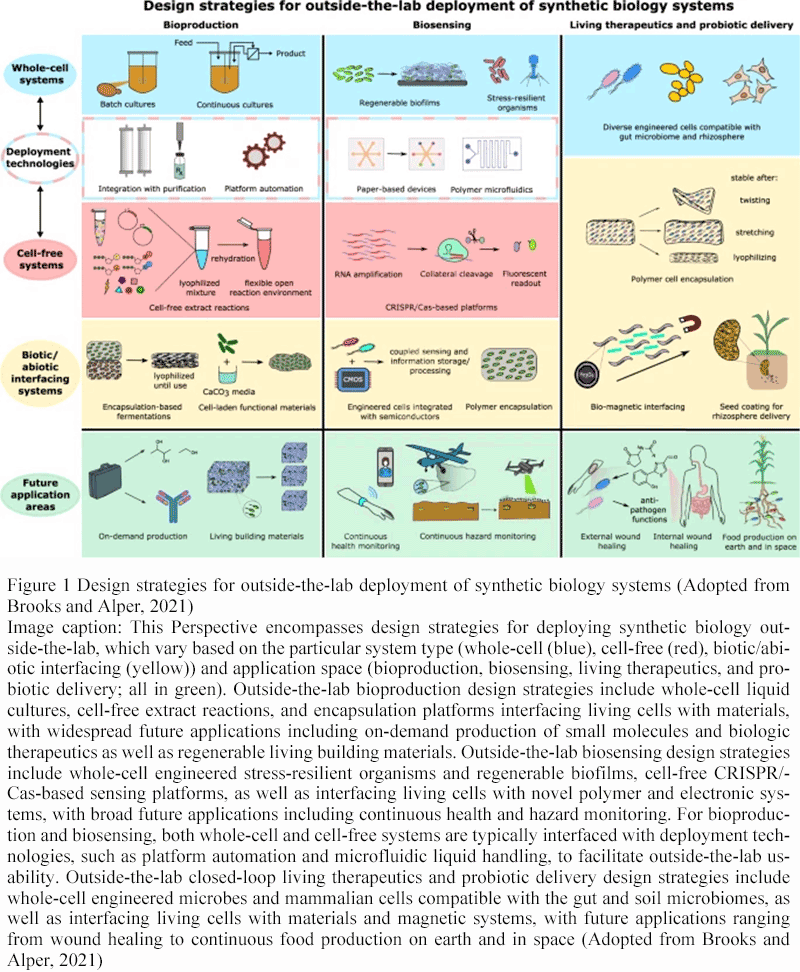 Figure 1 Design strategies for outside-the-lab deployment of synthetic biology systems (Adopted from Brooks and Alper, 2021) Image caption: This Perspective encompasses design strategies for deploying synthetic biology outside-the-lab, which vary based on the particular system type (whole-cell (blue), cell-free (red), biotic/abiotic interfacing (yellow)) and application space (bioproduction, biosensing, living therapeutics, and probiotic delivery; all in green). Outside-the-lab bioproduction design strategies include whole-cell liquid cultures, cell-free extract reactions, and encapsulation platforms interfacing living cells with materials, with widespread future applications including on-demand production of small molecules and biologic therapeutics as well as regenerable living building materials. Outside-the-lab biosensing design strategies include whole-cell engineered stress-resilient organisms and regenerable biofilms, cell-free CRISPR/Cas-based sensing platforms, as well as interfacing living cells with novel polymer and electronic systems, with broad future applications including continuous health and hazard monitoring. For bioproduction and biosensing, both whole-cell and cell-free systems are typically interfaced with deployment technologies, such as platform automation and microfluidic liquid handling, to facilitate outside-the-lab usability. Outside-the-lab closed-loop living therapeutics and probiotic delivery design strategies include whole-cell engineered microbes and mammalian cells compatible with the gut and soil microbiomes, as well as interfacing living cells with materials and magnetic systems, with future applications ranging from wound healing to continuous food production on earth and in space (Adopted from Brooks and Alper, 2021) |
5.2 Challenges in ensuring transparency and public engagement in the development of synthetic biology products
Ensuring transparency and public engagement in the development of synthetic biology products is crucial for maintaining public trust and acceptance. One significant challenge is the complexity of SynBio technologies, which can make it difficult for the general public to understand the potential risks and benefits (Bubela et al., 2012). Effective communication strategies are needed to convey this information in an accessible manner. Additionally, there is a need for inclusive public engagement processes that involve diverse stakeholders, including marginalized communities who may be disproportionately affected by SynBio applications. Transparency in regulatory processes and decision-making is also essential to address public concerns and prevent misinformation (Gregorowius and Deplazes-Zemp, 2016). By fostering open dialogue and collaboration, stakeholders can work together to develop ethically sound SynBio products.
5.3 Intellectual property issues and their ethical implications
Intellectual property (IP) issues in synthetic biology raise several ethical implications. The patenting of synthetic organisms and genetic sequences can lead to monopolies and restrict access to essential technologies, particularly in low-income countries. This can exacerbate global inequalities and limit the potential benefits of SynBio innovations. Additionally, the proprietary nature of IP can hinder scientific collaboration and the sharing of knowledge, which are essential for advancing the field (Kuzma, 2015). Ethical considerations also include the potential for biopiracy, where genetic resources from indigenous communities are exploited without proper compensation or acknowledgment. Addressing these IP issues requires a balanced approach that protects innovators’ rights while ensuring equitable access to SynBio technologies and promoting collaborative research.
6 Societal-Level Ethical Concerns
6.1 Potential impacts of synthetic biology on social justice and equity
Synthetic biology (SynBio) has the potential to significantly impact social justice and equity. One of the primary concerns is the socioeconomic divide that may be exacerbated by the uneven distribution of SynBio technologies. The technological gap between developed and developing countries could widen, as wealthier nations are more likely to benefit from advancements in SynBio, leaving poorer nations behind. Additionally, the replacement of natural products with synthetic alternatives could threaten the livelihoods of communities in developing countries that rely on these natural resources (Schmidt, 2009). This could lead to increased economic disparity and social inequity.
6.2 Ethical issues related to environmental sustainability and ecological balance
The environmental sustainability and ecological balance are critical ethical concerns in the field of synthetic biology. SynBio applications, such as the engineering of microbes for biomining or the creation of synthetic organisms, pose potential risks to the environment. These risks include unintended ecological consequences, such as the disruption of local ecosystems and the potential for synthetic organisms to outcompete natural species. Moreover, the long-term environmental impacts of releasing synthetic organisms into the wild are not fully understood, raising concerns about biosafety and biosecurity (Rager-Zisman, 2013). The development of green biopolymers and sustainable synthesis methods, while promising, also necessitates careful consideration of their ecological footprint.
6.3 The role of synthetic biology in addressing or exacerbating global challenges
Synthetic biology holds promise for addressing several global challenges, including climate change and food security. For instance, SynBio can contribute to the development of sustainable biofuels and the engineering of crops with improved yields and resilience to climate change. However, the deployment of these technologies must be managed carefully to avoid exacerbating existing problems. For example, the large-scale adoption of genetically modified organisms (GMOs) could lead to monocultures, reducing biodiversity and making ecosystems more vulnerable to pests and diseases (Carter et al., 2022). Additionally, the ethical implications of using SynBio to combat antimicrobial resistance and other health challenges must be considered, as these applications could have far-reaching consequences for public health and safety (Brooks and Alper, 2021).
7 Case Study: Ethical Dilemmas in the Development of Gene Drives
7.1 Overview of Gene Drive Technology and Its Potential Applications
Gene drive technology represents a groundbreaking advancement in genetic engineering, enabling the alteration of genetic traits within wild populations at a rate surpassing traditional Mendelian inheritance. This technology leverages mechanisms such as CRISPR-Cas9 to ensure that specific genetic modifications are passed on to a majority of offspring, thereby rapidly spreading these traits through populations (Figure 2) (Callies, 2019; Verkuijl et al., 2022; Vergara et al., 2022). The potential applications of gene drives are vast, ranging from controlling vector-borne diseases by targeting mosquito populations to managing invasive species and agricultural pests (Vergara et al., 2022). For instance, gene drives could be used to render mosquitoes incapable of transmitting malaria or to suppress populations of crop-damaging insects, thereby offering significant benefits to public health and agriculture (Bier, 2021).
 Figure 2 Illustration of CRISPR-based gene drive inheritance compared to natural Mendelian inheritance (Adopted from Vergara et al., 2022) Image caption: Insects and other organisms typically have a 50% chance of passing an altered gene to their progeny (a). When inherited this way, the altered gene may not spread to many individuals in the population and will vanish after many generations. However, if the altered allele is linked to a CRISPR/Cas9 gene drive as shown in the schematic on the upper-right side of (b), the CRISPR gRNA will guide the Cas9 to the target site on the WT chromosome to make a double-strand break at the target site. The break will be repaired through HDR using the drive-containing chromosome as a template. This will result in the gRNA, the Cas9 drive, and the altered gene being copied into the homologous chromosome guaranteeing that it gets passed at higher rates (b) (Adopted from Vergara et al., 2022) |
7.2 Specific ethical challenges associated with the use of gene drives in controlling pest populations
The deployment of gene drives in controlling pest populations raises several ethical challenges. One major concern is the potential for unintended ecological consequences. The introduction of gene drives could disrupt ecosystems by affecting non-target species or leading to the evolution of resistance in target populations (Verkuijl et al., 2022). Additionally, there are questions about the morality of manipulating wild populations and the potential for irreversible changes to ecosystems. The concept of “technological fixes” is also debated, with critics arguing that relying on gene drives may divert attention from more sustainable and holistic approaches to pest management (Callies, 2019). Furthermore, the decision-making process regarding the deployment of gene drives must be inclusive, ensuring that the voices of affected communities and stakeholders are heard and respected (Sandler, 2019).
7.3 Public perception, regulatory challenges, and the role of global governance in managing gene drive technology
Public perception of gene drive technology is mixed, with significant concerns about safety, ethics, and the potential for misuse. Effective public engagement and transparent communication are essential to address these concerns and build trust. Regulatory challenges are also prominent, as existing frameworks may not be adequately equipped to handle the unique risks and ethical considerations posed by gene drives (Sandler, 2019). There is a pressing need for global governance structures that can provide oversight, establish ethical guidelines, and ensure that gene drive research and applications are conducted responsibly and equitably (Kormos et al., 2022). This includes developing international standards and frameworks to guide the co-development of gene drive technologies with local communities, ensuring that their perspectives and needs are central to the decision-making process.
8 Public Perception and Engagement
8.1 The importance of public understanding and involvement in synthetic biology decision-making
Public understanding and involvement are crucial in the field of synthetic biology due to the profound ethical, social, and environmental implications of the technology. The novelty and complexity of synthetic biology, which involves the creation and manipulation of biological systems that do not naturally occur, necessitate transparent communication and inclusive decision-making processes to maintain public trust and ensure ethical governance (Bubela et al., 2012; Karoui et al., 2019). Public perception significantly influences the acceptance and regulatory landscape of synthetic biology applications, making it essential to address public concerns and involve diverse stakeholders in the dialogue (Paleri and Hens, 2023). Engaging the public early and continuously can help mitigate fears, align technological advancements with societal values, and foster a more informed and supportive community (Rose et al., 2018; Braun et al, 2019).
8.2 Strategies for effective science communication and addressing public concerns
Effective science communication strategies are vital for addressing public concerns and fostering a better understanding of synthetic biology. One approach is to move beyond the traditional "deficit model" of public understanding, which assumes that public apprehension stems from a lack of knowledge, and instead adopt more interactive and participatory methods (Marris, 2015). This includes organizing public forums, debates, and citizen panels to facilitate open dialogue and allow the public to voice their concerns and expectations. Additionally, leveraging media and educational campaigns to provide balanced information about the benefits and risks of synthetic biology can help demystify the technology and build trust (Anderson et al., 2012). Researchers and policymakers should also prioritize transparency and inclusivity in their communication efforts, ensuring that diverse perspectives are considered and that the public feels genuinely involved in the decision-making process.
8.3 Case examples of public engagement efforts in synthetic biology initiatives
Several initiatives have demonstrated the importance and effectiveness of public engagement in synthetic biology. For instance, the “Meeting of Young Minds” in the Netherlands facilitated a public debate between prospective politicians and synthetic biologists, highlighting the diverse views and fostering a deeper understanding of the technology. In Australia, targeted qualitative research involving in-depth interviews with government, research, and civil society representatives revealed key challenges and opportunities for synthetic biology applications, emphasizing the need for continuous public engagement to address perceived negative attitudes and regulatory uncertainties (Carter et al., 2022). Another example is the extensive public e-forum and stakeholder consultations conducted to prioritize societal and ethical issues in synthetic biology, which encouraged multi-stakeholder governance and continuous dialogue (Schmidt et al., 2009). These case studies underscore the value of proactive and inclusive public engagement in shaping the future of synthetic biology responsibly and ethically.
9 Regulatory and Policy Considerations
9.1 Overview of existing regulatory frameworks governing synthetic biology
Synthetic biology (SynBio) is governed by a variety of regulatory frameworks that differ significantly across regions. In the United States, regulatory measures have been introduced to address biosafety and biosecurity concerns, particularly in response to dual-use research that could be misappropriated for bioterrorism. The Israeli government has also implemented stringent biosecurity measures, including the Regulation of Research into Biological Disease Agents Law, to safeguard research activities. In Europe, the regulatory landscape is characterized by frameworks rooted in historical concepts of containment and release, which have been applied to various SynBio projects, such as biosensors and engineered insects (Sundaram et al., 2023). However, these frameworks often struggle to keep pace with the rapid advancements in SynBio technologies.
9.2 Challenges in developing comprehensive policies that address the unique ethical concerns of synthetic biology
Developing comprehensive policies for SynBio is fraught with challenges due to the unique ethical concerns it presents. One major issue is the dual-use dilemma, where research intended for beneficial purposes could be repurposed for harmful activities (Rager-Zisman, 2013). Additionally, the novelty of SynBio technologies often leads to public skepticism and negative attitudes, which can hinder regulatory acceptance and commercialization (Bubela et al., 2012). The ethical landscape of SynBio also includes concerns about biosafety, biosecurity, and the socioeconomic and environmental impacts of releasing synthetic organisms into the environment (Yearley, 2009; Paleri and Hens., 2023). Furthermore, existing governance mechanisms may not be adequate to address the complex and far-reaching societal impacts of SynBio innovations, necessitating new forms of regulatory oversight and extensive testing (Wallach et al., 2018).
9.3 The role of international cooperation in harmonizing regulations and ethical standards
International cooperation is crucial for harmonizing regulations and ethical standards in SynBio. The global nature of SynBio research and its potential impacts necessitate a coordinated approach to governance. For instance, the European Union has been actively involved in discussions to address the ethical, legal, and social implications of SynBio, particularly in the context of human health (Douglas et al., 2014). Moreover, the concept of “prudent vigilance”, inspired by the U.S. Presidential Commission on Bioethics, advocates for an ongoing and periodically revised process of risk assessment and management, which could serve as a model for international regulatory frameworks (Colussi, 2013). Such cooperation can help ensure that SynBio technologies are developed and deployed responsibly, minimizing risks while maximizing benefits for society.
10 Concluding Remarks
This study has identified and analyzed the key ethical challenges associated with synthetic biology (SynBio), spanning from laboratory research to societal applications. Among the most significant issues are concerns related to biosafety and biosecurity, particularly the potential risks of releasing synthetic organisms into the environment and the possibility of dual-use applications in bioterrorism. The creation and manipulation of synthetic life forms raise profound ethical questions about the definition of life and humanity's role in altering it. Moreover, socioeconomic and environmental impacts, such as the widening technological divide and the potential disruption of ecosystems, highlight the far-reaching consequences of SynBio applications. Public perception and involvement, intellectual property rights, and the regulatory challenges of governing this rapidly evolving field also remain critical areas of concern.
To foster ethical practices in synthetic biology, several recommendations are essential. Researchers should integrate ethical analysis into the early stages of scientific innovation, ensuring that safety and social impacts are considered alongside technical feasibility. Meanwhile, regulatory frameworks must be updated and harmonized at a global level, ensuring they can address both the unique risks and opportunities posed by SynBio technologies. In addition, promoting transparency and public engagement through effective science communication is crucial to maintaining trust and addressing societal concerns. Stakeholder involvement should be inclusive, allowing diverse communities to contribute to the decision-making process.
As synthetic biology continues to advance, there is a need for ongoing dialogue between scientists, ethicists, policymakers, and the public to address emerging ethical issues. This interdisciplinary collaboration is vital to ensuring that SynBio develops in a way that is both responsible and aligned with societal values, maximizing its benefits while minimizing potential harms. Through continuous reflection and proactive governance, the field of synthetic biology can evolve ethically and sustainably.
Acknowledgments
The author thanks the two anonymous peer reviewers for their thorough review of this study and for their valuable suggestions for improvement..
Conflict of Interest Disclosure
The author affirms that this research was conducted without any commercial or financial relationships that could be construed as a potential conflict of interest.
Anderson J., Strelkowa N., Stan G., Douglas T., Savulescu J., Barahona M., and Papachristodoulou A., 2012, Engineering and ethical perspectives in synthetic biology, EMBO Reports, 13: 584-590.
https://doi.org/10.1038/embor.2012.81
Bier E., 2021, Gene drives gaining speed, Nature Reviews Genetics, 23: 5-22.
https://doi.org/10.1038/s41576-021-00386-0
Braun M., Fernau S., and Dabrock P., 2019, (Re-)designing nature? An overview and outlook on the ethical and societal challenges in synthetic biology, Advanced Biosystems, 3(6): 1800326.
https://doi.org/10.1002/adbi.201800326
Brooks S., and Alper H., 2021, Applications, challenges, and needs for employing synthetic biology beyond the lab, Nature Communications, 12(1): 1390.
https://doi.org/10.1038/s41467-021-21740-0
Bubela T., Hagen G., and Einsiedel E., 2012, Synthetic biology confronts publics and policy makers: challenges for communication, regulation and commercialization, Trends in Biotechnology, 30(3): 132-137.
https://doi.org/10.1016/j.tibtech.2011.10.003
Callies D., 2019, The ethical landscape of gene drive research, Bioethics, 33(9): 1091-1097.
https://doi.org/10.1111/bioe.12640
Carter L., Mankad A., Hobman E., Weynberg K., Kaksonen A., and Cooper C., 2022, Three synthetic biology applications and their paths to impact in Australia: cane toads, bacteriophages, and biomining microbes, Biotechnology Journal, 17(9): 2200009.
https://doi.org/10.1002/biot.202200009
Colussi I., 2013, Synthetic biology between challenges and risks: suggestions for a model of governance and a regulatory framework, based on fundamental rights, Revista de Derecho y Genoma Humano = Law and the Human Genome Review, 38: 185-214.
Douglas C., and Stemerding D., 2014, Challenges for the European governance of synthetic biology for human health, Life Sciences, Society and Policy, 10(1): 6.
https://doi.org/10.1186/s40504-014-0006-7
Douglas T., and Savulescu J., 2010, Synthetic biology and the ethics of knowledge, Journal of Medical Ethics, 36: 687-693.
https://doi.org/10.1136/jme.2010.038232
Elgabry M., Nesbeth D., and Johnson S., 2020, A systematic review of the criminogenic potential of synthetic biology and routes to future crime prevention, Frontiers in Bioengineering and Biotechnology, 8: 571672.
https://doi.org/10.3389/fbioe.2020.571672
Gómez-Tatay L., and Hernández-Andreu J., 2019, Biosafety and biosecurity in synthetic biology: a review, Critical Reviews in Environmental Science and Technology, 49: 1587-1621.
https://doi.org/10.1080/10643389.2019.1579628
Gómez-Tatay L., Hernández-Andreu J., and Aznar J., 2016, A personalist ontological approach to synthetic biology, Bioethics, 30(6): 397-406.
https://doi.org/10.1111/bioe.12230
Gregorowius D., and Deplazes-Zemp A., 2016, Societal impact of synthetic biology: responsible research and innovation (RRI), Essays in Biochemistry, 60(4): 371-379.
https://doi.org/10.1042/EBC20160039
Gutmann A., 2011, The ethics of synthetic biology: guiding principles for emerging technologies, Hastings Center Report, 41: 17-22.
https://doi.org/10.1002/j.1552-146X.2011.tb00118.x
Heavey P., 2015, Integrating ethical analysis “into the DNA” of synthetic biology, Medicine, Health Care and Philosophy, 18: 121-127.
https://doi.org/10.1007/s11019-014-9588-3
Hurlbut J., 2015, Reimagining responsibility in synthetic biology, Journal of Responsible Innovation, 2: 113-116.
https://doi.org/10.1080/23299460.2015.1010770
Karoui M., Hoyos-Flight M., and Fletcher L., 2019, Future trends in synthetic biology—A report, Frontiers in Bioengineering and Biotechnology, 7: 471916.
https://doi.org/10.3389/fbioe.2019.00175
Kormos A., Lanzaro G., Bier E., Santos V., Nazaré L., Pinto J., Santos A., and James A., 2022, Ethical considerations for gene drive: challenges of balancing inclusion, power and perspectives, Frontiers in Bioengineering and Biotechnology, 10: 826727.
https://doi.org/10.3389/fbioe.2022.826727
Kuzma J., 2015, Translational governance research for synthetic biology, Journal of Responsible Innovation, 2: 109-112.
https://doi.org/10.1080/23299460.2014.1002055
Marris C., 2015, The construction of imaginaries of the public as a threat to synthetic biology, Science as Culture, 24: 83-98.
https://doi.org/10.1080/09505431.2014.986320
Paleri V., and Hens K., 2023, Beyond the organism versus machine dichotomy: a review of ethical concerns in synthetic biology, ACS Synthetic Biology, 13(1): 3-14.
https://doi.org/10.1021/acssynbio.3c00456
Rager-Zisman B., 2013, Ethical and regulatory challenges posed by synthetic biology, Perspectives in Biology and Medicine, 55: 590-607.
https://doi.org/10.1353/pbm.2012.0043
Rogers W., 2015, Ethical issues in synthetic biology: a commentary, Macquarie Law Journal, 15: 39-44.
Rose K., Howell E., Scheufele D., Brossard D., and Xenos M., 2018, The values of synthetic biology: researcher views of their field and participation in public engagement, BioScience, 68: 782-791.
https://doi.org/10.1093/biosci/biy077
Sandler R., 2019, The ethics of genetic engineering and gene drives in conservation, Conservation Biology, 34(2): 378-385.
https://doi.org/10.1111/cobi.13407
Schmidt M., 2009, Special issue: societal aspects of synthetic biology, Systems and Synthetic Biology, 3: 1-2.
https://doi.org/10.1007/s11693-009-9043-6
Schmidt M., Ganguli-Mitra A., Torgersen H., Kelle A., Deplazes A., and Biller-Andorno N., 2009, A priority paper for the societal and ethical aspects of synthetic biology, Systems and Synthetic Biology, 3: 3-7.
https://doi.org/10.1007/s11693-009-9034-7
Serrano L., 2007, Synthetic biology: promises and challenges, Molecular Systems Biology, 3(1): 158.
https://doi.org/10.1038/msb4100202
Sundaram L., Ajioka J., and Molloy J., 2023, Synthetic biology regulation in Europe: containment, release and beyond, Synthetic Biology, 8(1): ysad009.
https://doi.org/10.1093/synbio/ysad009
Trump B., Galaitsi S., Appleton E., Bleijs D., Florin M., Gollihar J., Hamilton R., Kuiken T., Lentzos F., Mampuys R., Merad M., Novossiolova T., Oye K., Perkins E., Garcia-Reyero N., Rhodes C., and Linkov I., 2020, Building biosecurity for synthetic biology, Molecular Systems Biology, 16(7): e9723.
https://doi.org/10.15252/msb.20209723
Vergara M., Labbé J., and Tannous J., 2022, Reflection on the challenges, accomplishments, and new frontiers of gene drives, Biodesign Research, 2022: 9853416.
https://doi.org/10.34133/2022/9853416
Verkuijl S., Ang J., Alphey L., Bonsall M., and Anderson M., 2022, The challenges in developing efficient and robust synthetic homing endonuclease gene drives, Frontiers in Bioengineering and Biotechnology, 10: 856981.
https://doi.org/10.3389/fbioe.2022.856981
Wallach W., Saner M., and Marchant G., 2018, Beyond cost-benefit analysis in the governance of synthetic biology, Hastings Center Report, 48(Suppl 1): S70-S77.
https://doi.org/10.1002/hast.822
Wang F., and Zhang W., 2019, Synthetic biology: recent progress, biosafety and biosecurity concerns, and possible solutions, Journal of Biosafety and Biosecurity, 1(1): 22-30.
https://doi.org/10.1016/j.job.2018.12.003
Wang G., Kong Q., Wang D., and Asmi F., 2023, Ethical and social insights into synthetic biology: predicting research fronts in the post-COVID-19 era, Frontiers in Bioengineering and Biotechnology, 11: 1085797.
https://doi.org/10.3389/fbioe.2023.1085797
Yearley S., 2009, The ethical landscape: identifying the right way to think about the ethical and societal aspects of synthetic biology research and products, Journal of the Royal Society Interface, 6: S559-S564.
https://doi.org/10.1098/rsif.2009.0055.focus




. HTML
Associated material
. Readers' comments
Other articles by authors
. Chunyang Zhan

Related articles
. Synthetic biology
. Ethical challenges
. Biosafety
. Intellectual property
. Public engagement
Tools
. Post a comment